Earth 2 Streamline Icon: https://streamlinehq.com Chicago / Los Angeles North America Calendar 3 Streamline Icon: https://streamlinehq.com 14 days Trip Distance Streamline Icon: https://streamlinehq.com 3620 KM Self-Guided

The Great American Diagonal Motorcycle Tour

Starting from €2,400 /person
Starting from
€2,400
Pauline
Roadtrip offered by Pauline
Expert in motorcycle travel in the USA – based in Tours, France

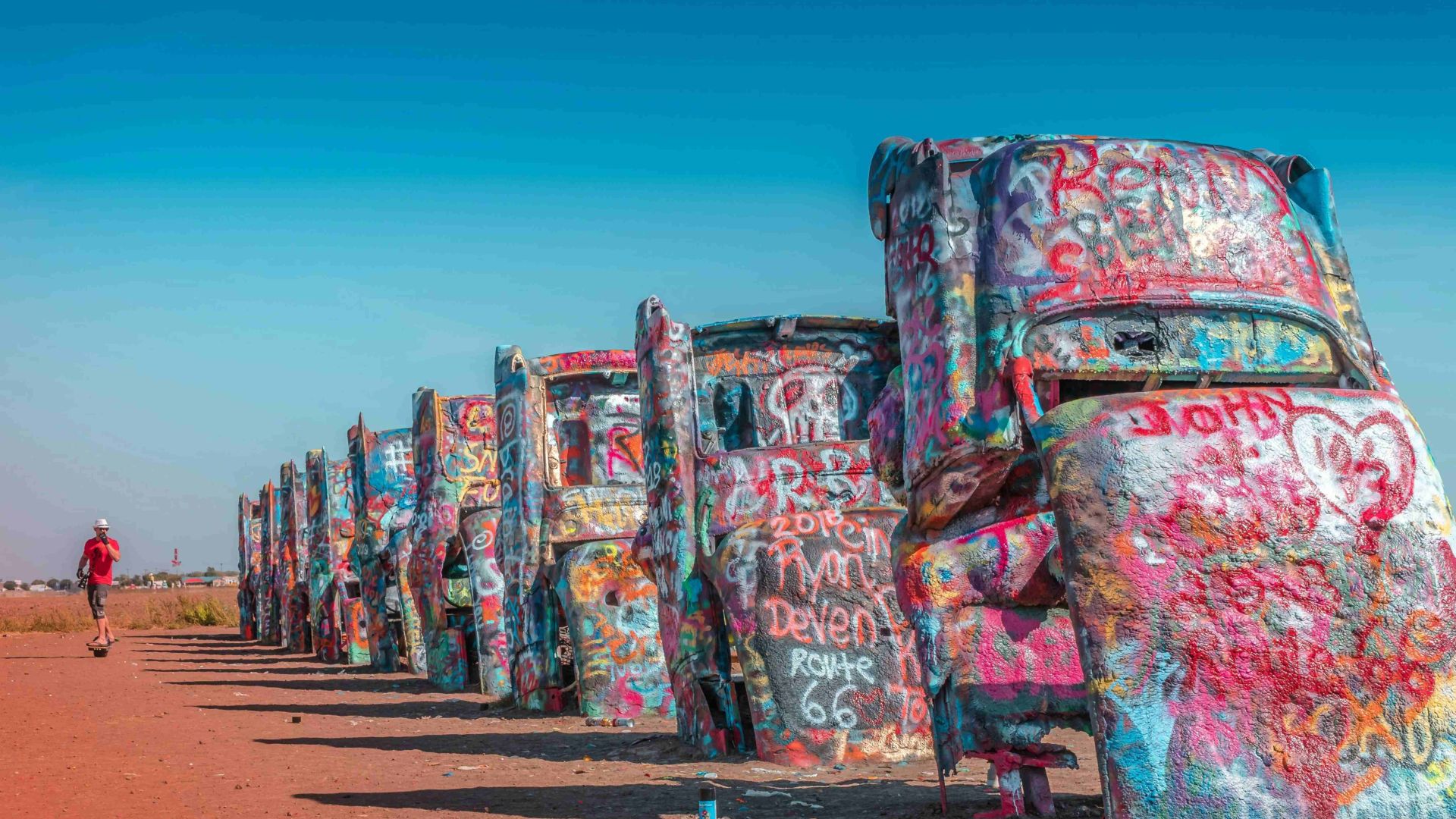
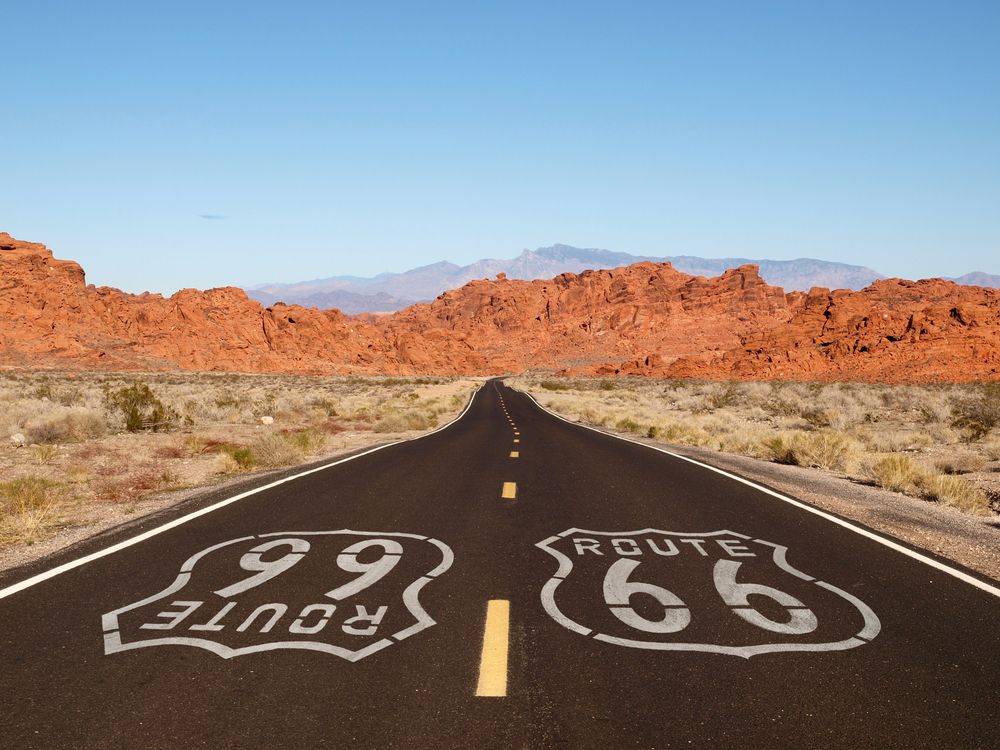
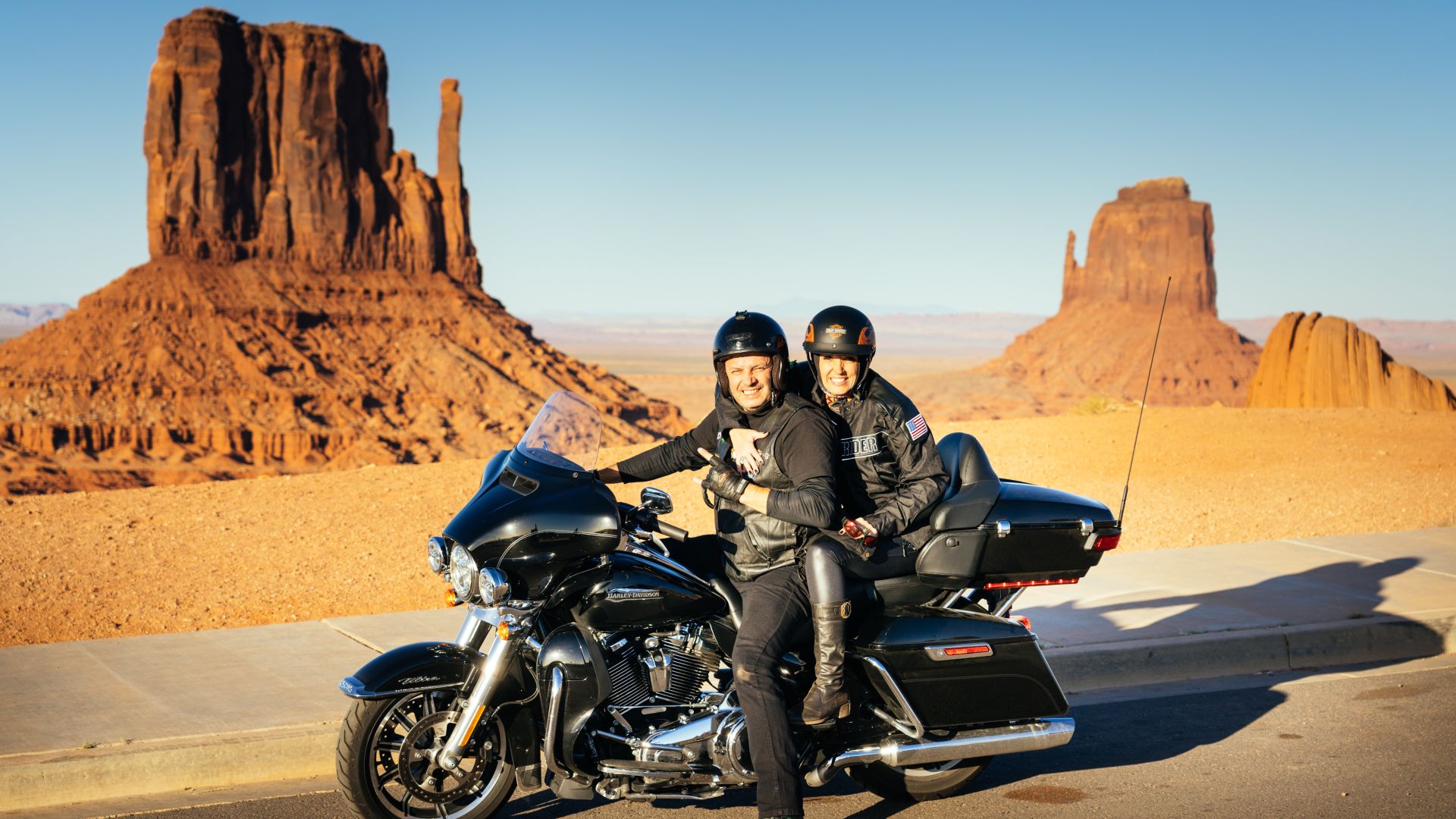
This trip is fully custom-made and self-guided, designed to bring your American dream to life along the legendary Route 66, from Chicago to Santa Monica. You keep your freedom on the road while following a carefully crafted itinerary that ensures you don’t miss a thing: Cadillac Ranch, the Grand Canyon, Las Vegas, or the iconic Bagdad Café.

This is not just a road trip, it’s the ultimate American bucket list experience. Over 14 days, you follow the most authentic sections of Route 66, away from major highways, to truly live every myth from the inside. Chicago, Cadillac Ranch, the Grand Canyon, Las Vegas… all the way to the legendary Bagdad Café lost in the desert. Nothing is left to chance: every stop is designed to tick off iconic landmarks and let you fully experience the spirit of the Mother Road.
You will love
  • Check iconAn original journey from Los Angeles to Chicago
  • Check iconExperience Cadillac Ranch, the Grand Canyon and retro diners in a unique order
  • Check iconEnjoy the full Route 66 experience at a significantly lower price
Partner Image
Roadtrip offered by
Pauline
Expert in motorcycle travel in the USA – based in Tours, France
Discover our expert

Day-by-day itinerary

Day 1

Chicago

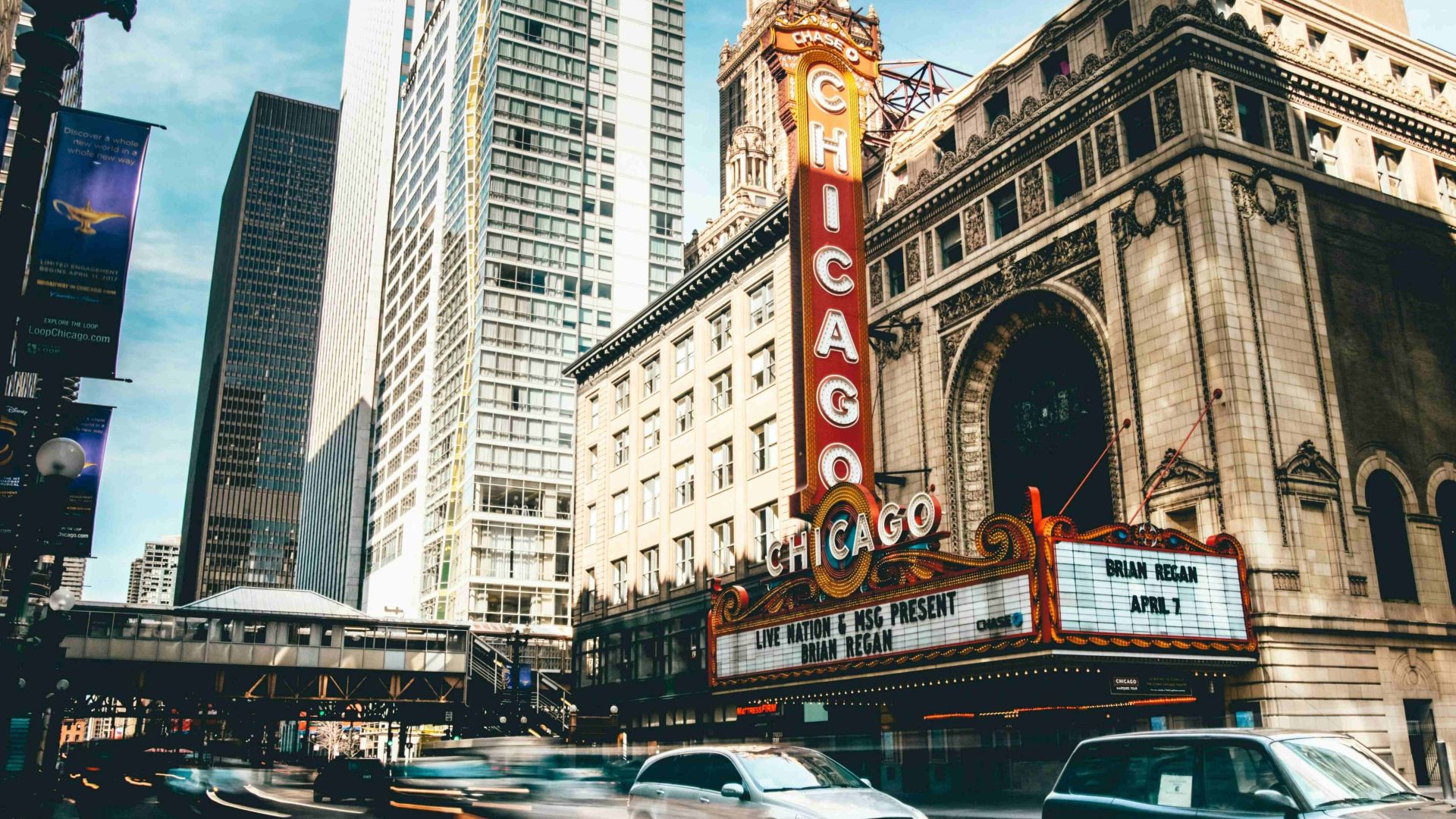
The adventure begins with your arrival at Chicago O’Hare International Airport (ORD), one of the major historic hubs of the United States. From the moment you step off the plane, you can already feel the unique energy of this city where Route 66 was born.
After arrival formalities, head to your hotel located in the heart of the Loop, the nerve center of Chicago. This district is no coincidence: it’s where it all begins, where industrial America, modern architecture, and popular culture came together to create a global road myth.
Your first urban immersion begins here. Chicago is an open-air museum:
pioneering skyscrapers, elevated train lines, Art Deco façades, buildings from the Chicago School.
This day is intentionally light. It allows you to land, recover, and start projecting yourself into the journey ahead.
Free evening, where you may enjoy a musical immersion in a legendary jazz club, a direct legacy of the city’s African-American history. Then, taste the famous deep dish pizza, an iconic and almost excessive dish, much like America itself.
Tomorrow, the adventure begins.
Day 2

Chicago - Bloomington

Departure in the morning from the Loop to reach the dealership and pick up your motorcycle (or SUV). This moment marks a real transition: the dense city gives way to a more horizontal, more readable America.
First stop in Wilmington, in front of the Gemini Giant. This fiberglass colossus is one of those roadside figures created in the 1950s to attract motorists. It perfectly embodies the commercial and carefree spirit of Route 66.
In Joliet, stop by the former prison made famous by The Blues Brothers, then pass by the Rialto Square Theatre, opened in 1926, a witness to the golden age of popular entertainment.
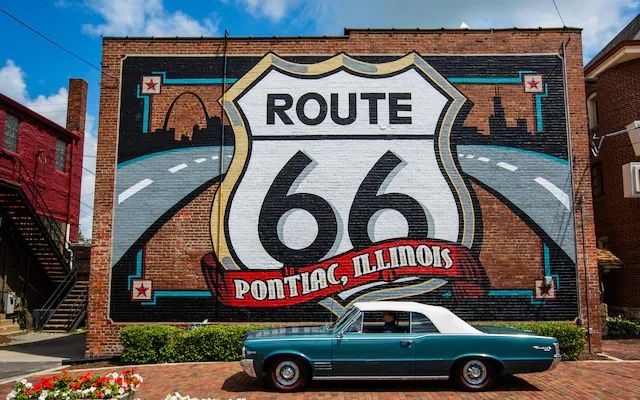
The road then leads to Pontiac, where car enthusiasts and road culture lovers will find plenty to enjoy: Route 66 Hall of Fame, monumental murals, Pontiac Museum. America tells its own myth in the open air.
At the end of the day, pass through Litchfield and its Skyview Drive-In, an open-air cinema operating since 1950. Even without a screening, the place tells the story of a time when the car was at the center of everything.
Arrival in Bloomington, overnight stay. 
350 km
Day 3

Bloomington - Saint-Louis

Before leaving Bloomington, a subtle but important reminder: Abraham Lincoln lived here. Route 66 is never far from great History.
Leaving the city, ride along the Illinois Brick Road, one of the last original paved sections still visible. The road is felt physically, irregular, deeply rooted.
We recommend a stop in Cuba, nicknamed the Route 66 Mural City. This small Missouri town features 14 outdoor murals depicting scenes from local and national history.
Take a break in Carlinville, then gradually enter the St. Louis metropolitan area. The landscape becomes more urban, industrial, marked by the Mississippi River.
Upon arrival, explore downtown on foot. The Gateway Arch dominates the skyline: it symbolizes westward expansion more than Route 66 itself. The massive underground stadium is also worth a look.
In the evening, a must-stop at Ted Drewes Frozen Custard, a local institution since 1929, famous for its ice creams.
180 km
Show next daysHide days
Day 4

St-Louis - Joplin

Leaving St. Louis, Route 66 gradually moves away from major infrastructure to return to a more human scale. Miles pass through a succession of small towns and typical Midwest agricultural landscapes.
This is where you understand that Route 66 is not just a mythical road, but also a daily life axis, used for decades by families, workers, and anonymous travelers.
Arrival in Joplin marks an interesting transition. The city has preserved and highlighted several elements of its Route 66 heritage, particularly through its murals and restored signage.
A free walk allows you to follow the Route 66 Mural & Neon Photo Tour, a true open-air journey telling the local story, the golden age of the road, and its recent revival.
Recommended break at Joplin Avenue Coffee, an independent café with a contemporary aesthetic, appreciated by locals and travelers alike.
Free evening to explore the streets or simply enjoy the calm after a day on the road.
450 km
Day 5

Joplin - Oklahoma City

Entering Oklahoma happens smoothly. The landscapes open up, the straight lines stretch out, announcing the vast spaces of the country’s center. Tulsa appears as a key stop to understand the cultural impact of Route 66.
Visiting the Woody Guthrie Center is a highlight of the day. Woody Guthrie, a major figure of American folk music, accompanied Dust Bowl migrants through his songs, many of whom traveled Route 66 to escape hardship.
The museum connects music, social history, and the road, giving deeper meaning to the miles traveled.
Then head to 11th Street, the former Route 66 alignment in Tulsa. Neon signs, old motels, and diners tell the story of a time when the road was a constant meeting place.
We recommend eating at Mother Road Market, a modern food hall reinterpreting the spirit of Route 66 through a diverse culinary offering.
Depending on your mood, the evening can continue in a bar with live music, in a country or rockabilly atmosphere.
200 km
Day 6

Oklahoma city - Amarillo

This stage highlights the importance of Route 66 in the development of Oklahoma. The landscapes remain wide and open, dotted with small towns that owe much of their existence to the Mother Road.
The key stop of the day is Clinton, considered the beating heart of Route 66 in Oklahoma. A visit to the Oklahoma Route 66 Museum is highly recommended. It is one of the few museums along the route truly worth your time, even on a fast-paced itinerary. The visit is smooth and well-designed, offering a complete understanding of the evolution of Route 66 from its pioneering days to its decline and eventual revival.
After Clinton, the road fully reveals its horizontal dimension. The scenery becomes drier and more mineral, gradually announcing the approach of Texas.
Arrival in Amarillo marks a real shift in atmosphere. By the end of the day, the low light enhances the vast landscapes and reinforces the feeling of having crossed a symbolic frontier.
330 km
Day 7

Amarillo - Santa Fe

The road gradually leaves the great plains behind and enters a more mineral environment. The colors shift, the light becomes harsher, signaling the approach of New Mexico.
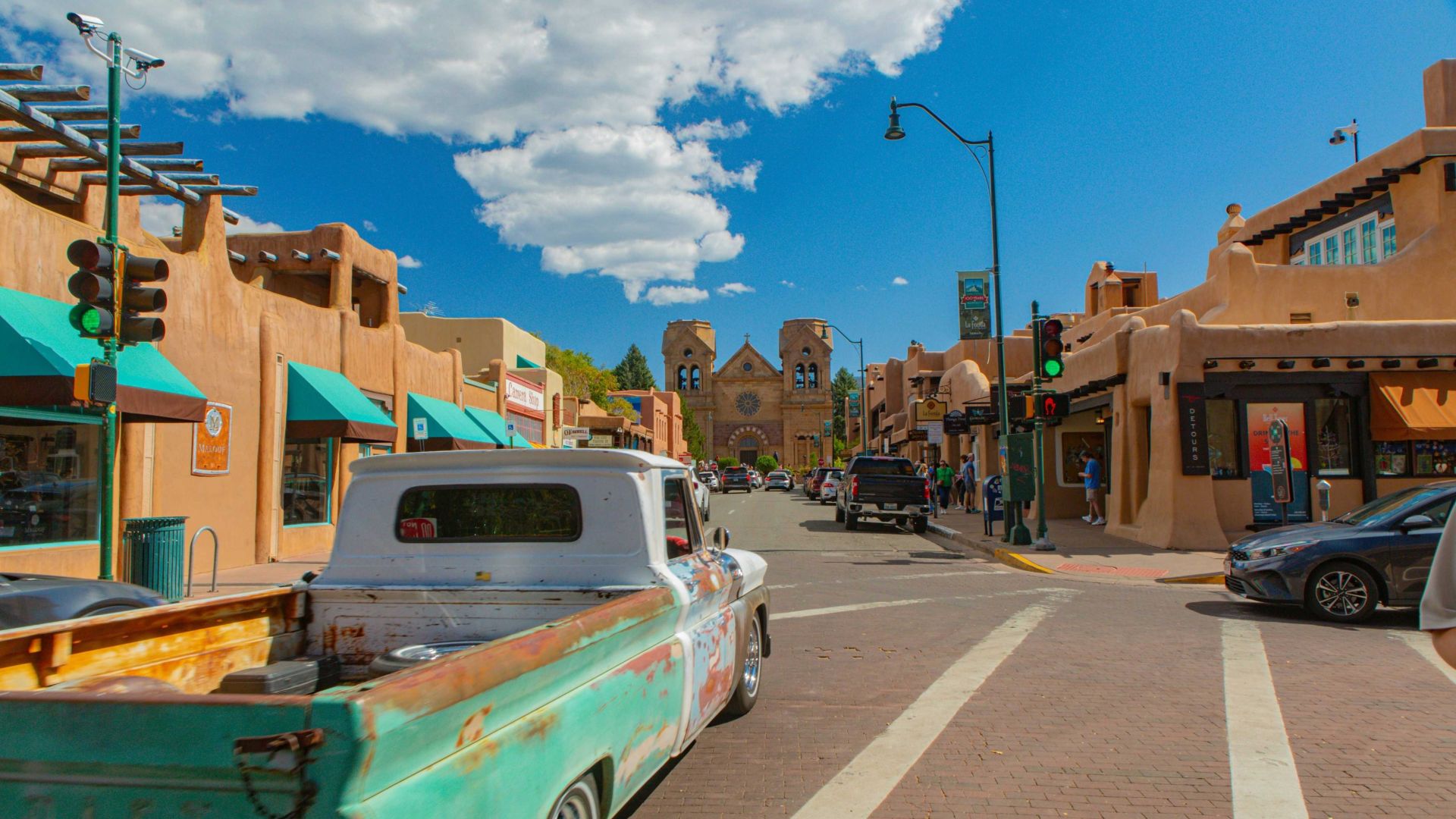
Arrival in Santa Fe marks a true change of atmosphere. One of the oldest cities in the United States, it stands out for its adobe architecture and its strong ties to Native American and Hispanic cultures.
The day is dedicated to wandering through the historic center: Native American art galleries, ancient churches, and peaceful streets.
You may enjoy the sunset from the surrounding hills—an iconic vision of the American Southwest.
Dinner can be enjoyed at Upper Crust Pizza, located in a traditional building. Overnight in a city that fully embodies the spirit of the Southwest.
440 km
Day 8

Santa Fe - Gallup

This is one of the most pleasant days to ride. Leaving Santa Fe happens quickly, and the road leads through increasingly open landscapes. Villages become rare, and traffic almost disappears in some sections. Riding becomes smooth, almost meditative.
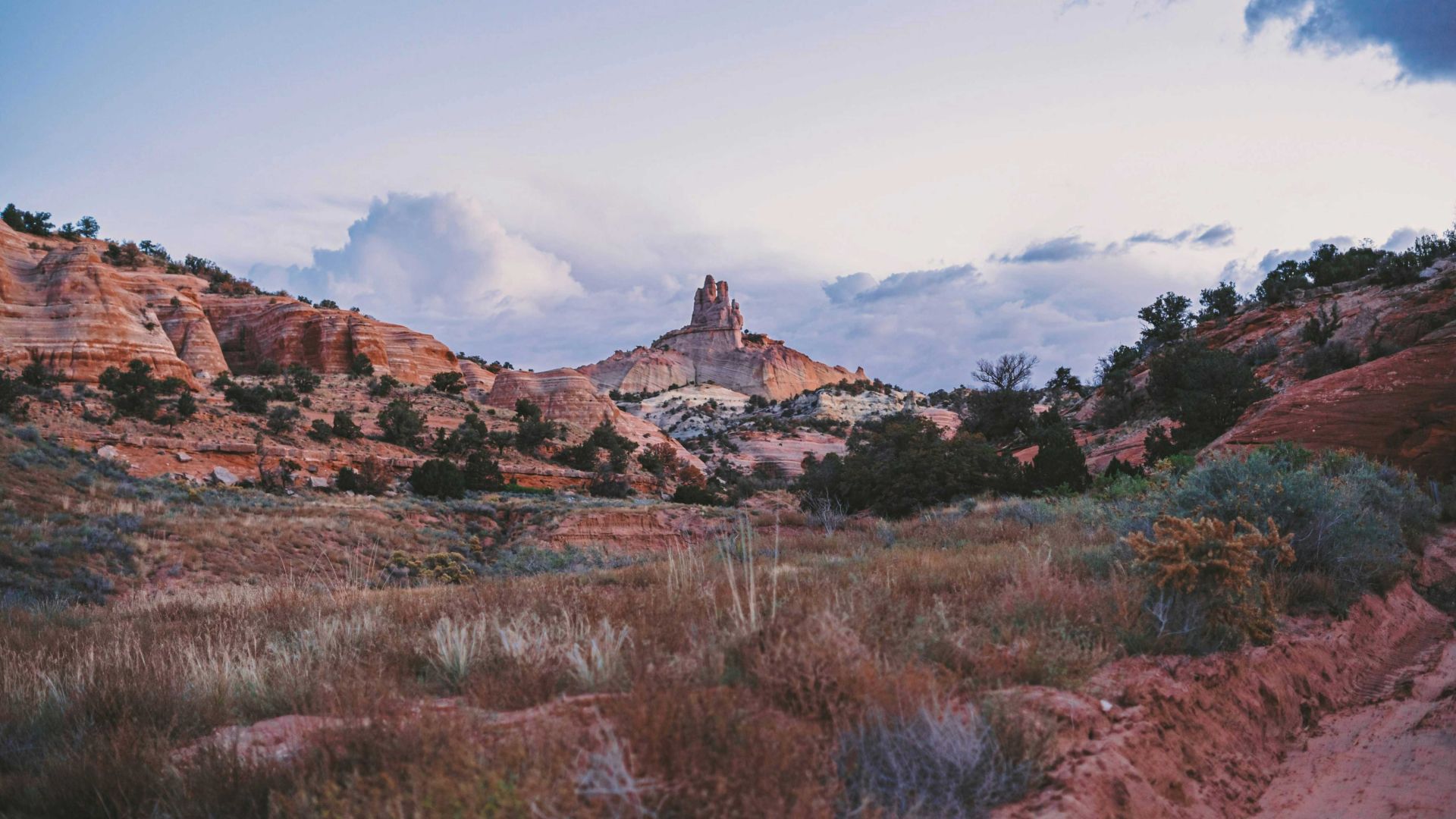
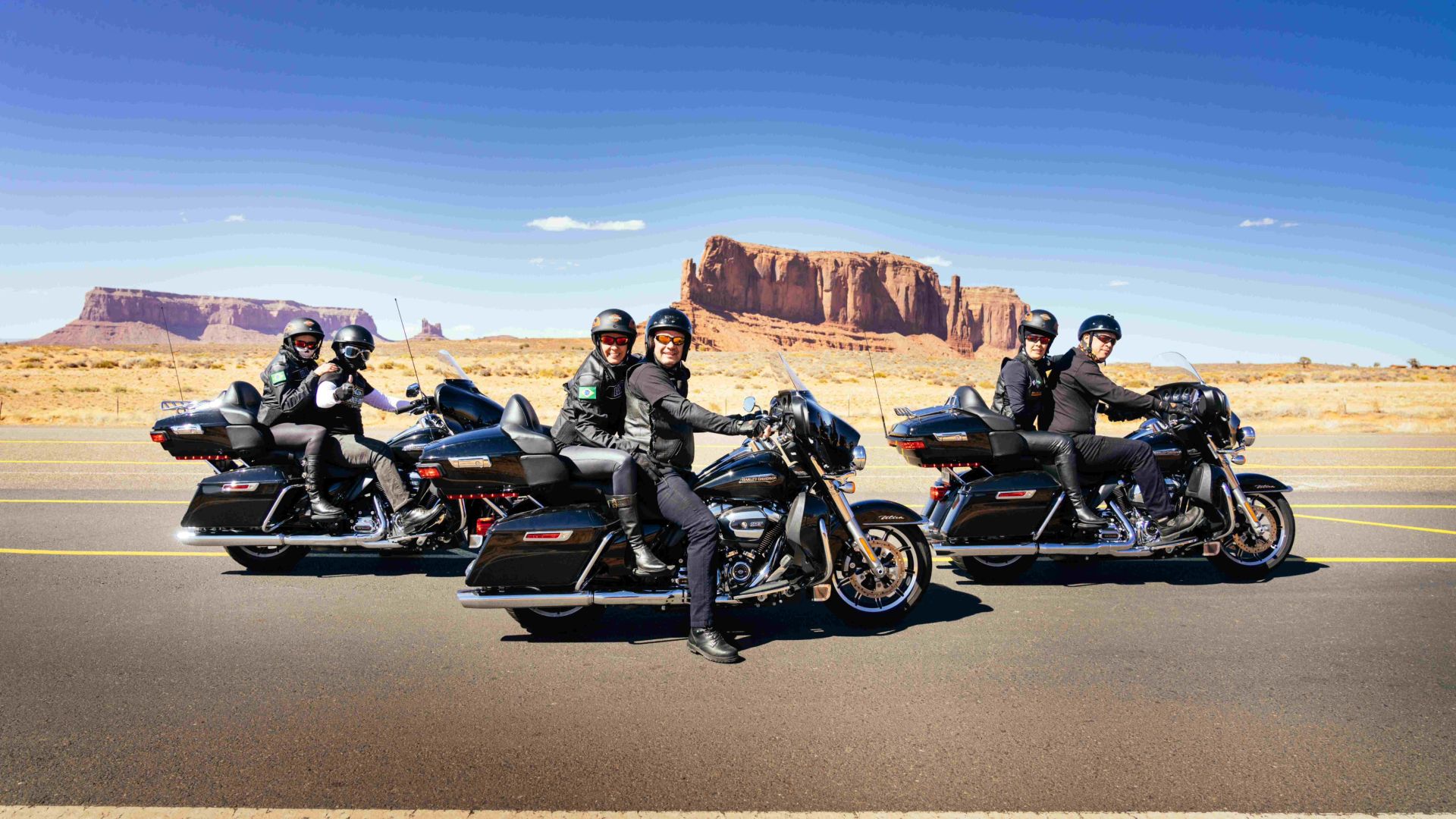
Along the way, the scenery alternates between desert plateaus and rock formations. Route 66 blends into the landscape—sometimes discreet, sometimes clearly visible through remnants along the road.
You pass through Grants, with its retro neon signs and typical restaurants, perfect for a quick break without losing momentum.
Arrival in Gallup reinforces the feeling of being far from everything. A true railway and road town, Gallup embodies a raw, passing America, perfectly aligned with the Road Runner spirit.
120 km
Day 9

Gallup - Williams

Leaving Gallup, Route 66 crosses a region where the landscape begins to tell a different story of America.
First possible stop in Lupton at the Yellowhorse Trading Post, an emblematic place of exchange between travelers and Navajo communities. Here you will find turquoise jewelry, local crafts, and traditional objects, but above all a direct connection between the road and the people who have lived here for generations.
The road then follows the Petrified Forest before crossing Holbrook, a town deeply tied to Route 66 history, known for its old motels and preserved roadside atmosphere.
In Winslow, a must-stop at the famous corner immortalized by the Eagles song, now a cultural landmark.
The afternoon is dedicated to the Grand Canyon. The gradual approach prepares you for the visual impact. At sunset, the viewpoints reveal the immensity of this landscape, often considered one of the defining images of the American West. Optional helicopter flight available.
350 km
Day 10

Williams - Kingman

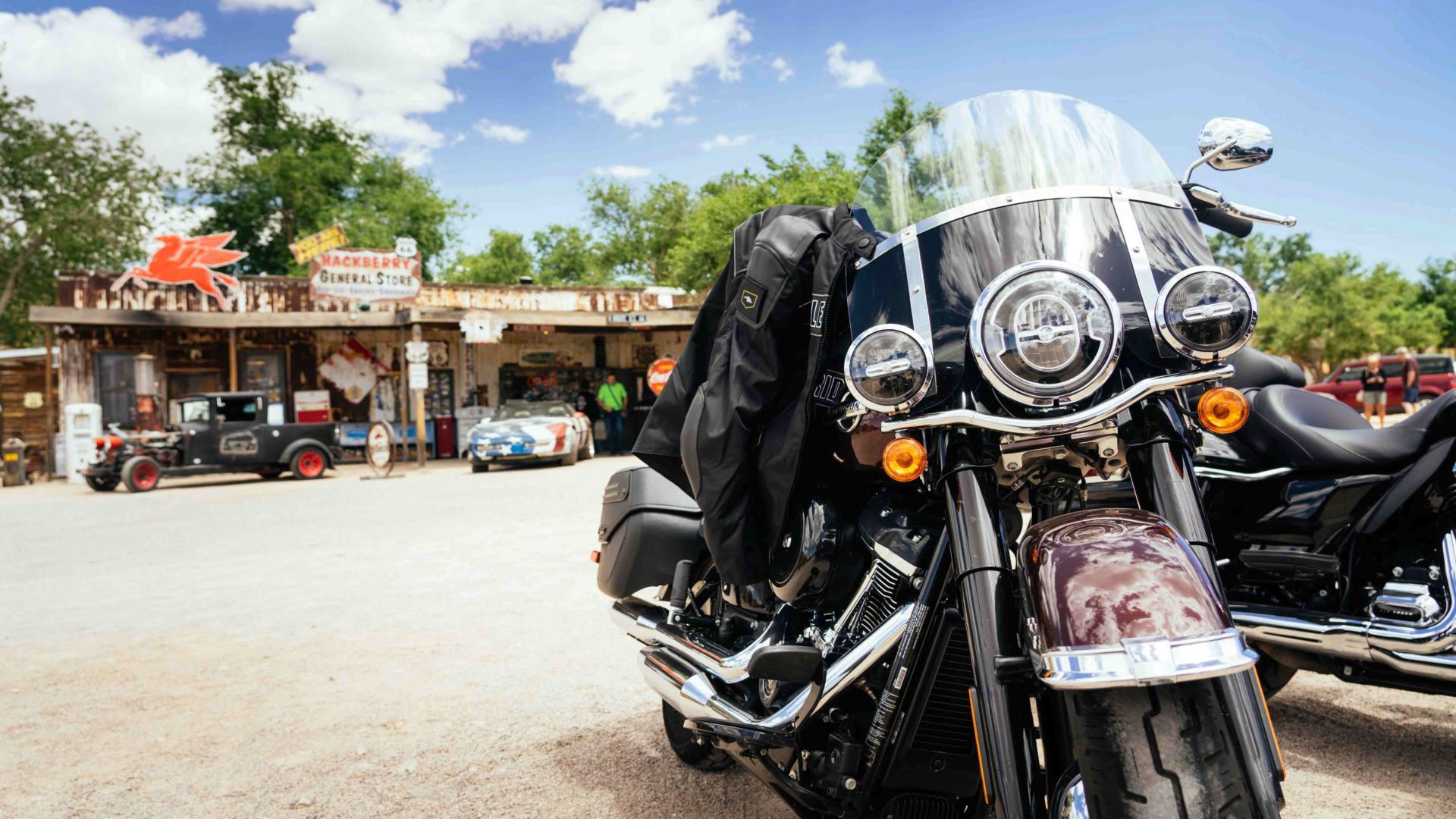
The day begins in Williams, the last town to be bypassed by the Interstate, which explains its strong attachment to Route 66. Stop at Pete’s Gas Station Museum, a perfectly preserved 1940s service station that reflects the era when the road dictated the rhythm of the town.
The road continues to Seligman, often considered the birthplace of Route 66’s revival. It was here that Angel Delgadillo worked to save the road from being forgotten. His barbershop has become a pilgrimage site for enthusiasts.
Break at the Black Cat Café, a historic establishment once frequented by cowboys, railway workers, and truck drivers, still maintaining a simple and authentic atmosphere.
Continuing toward Kingman, the road crosses more arid landscapes, marked by long straight lines and distant reliefs.
Upon arrival, visit the Powerhouse Route 66 Museum, located in a former power plant, retracing the history of the road in Arizona.
For those interested, a detour to Oatman is possible. This former mining town is now known for its wild donkeys roaming freely through the main street, a reminder of the gold rush era.
185 km
Day 11

Kingman - Las Vegas

Leaving Kingman, Route 66 gradually gives way to a more direct desert crossing. The landscapes become more mineral, shaped by heat and long straight lines that have defined the American road trip imagination.
This stretch allows you to fully grasp the contrast between the rural America explored in previous days and today’s destination. Las Vegas suddenly appears, like a complete rupture from the world of Route 66.
The city represents another American myth, born later: excess, entertainment, and illusion.
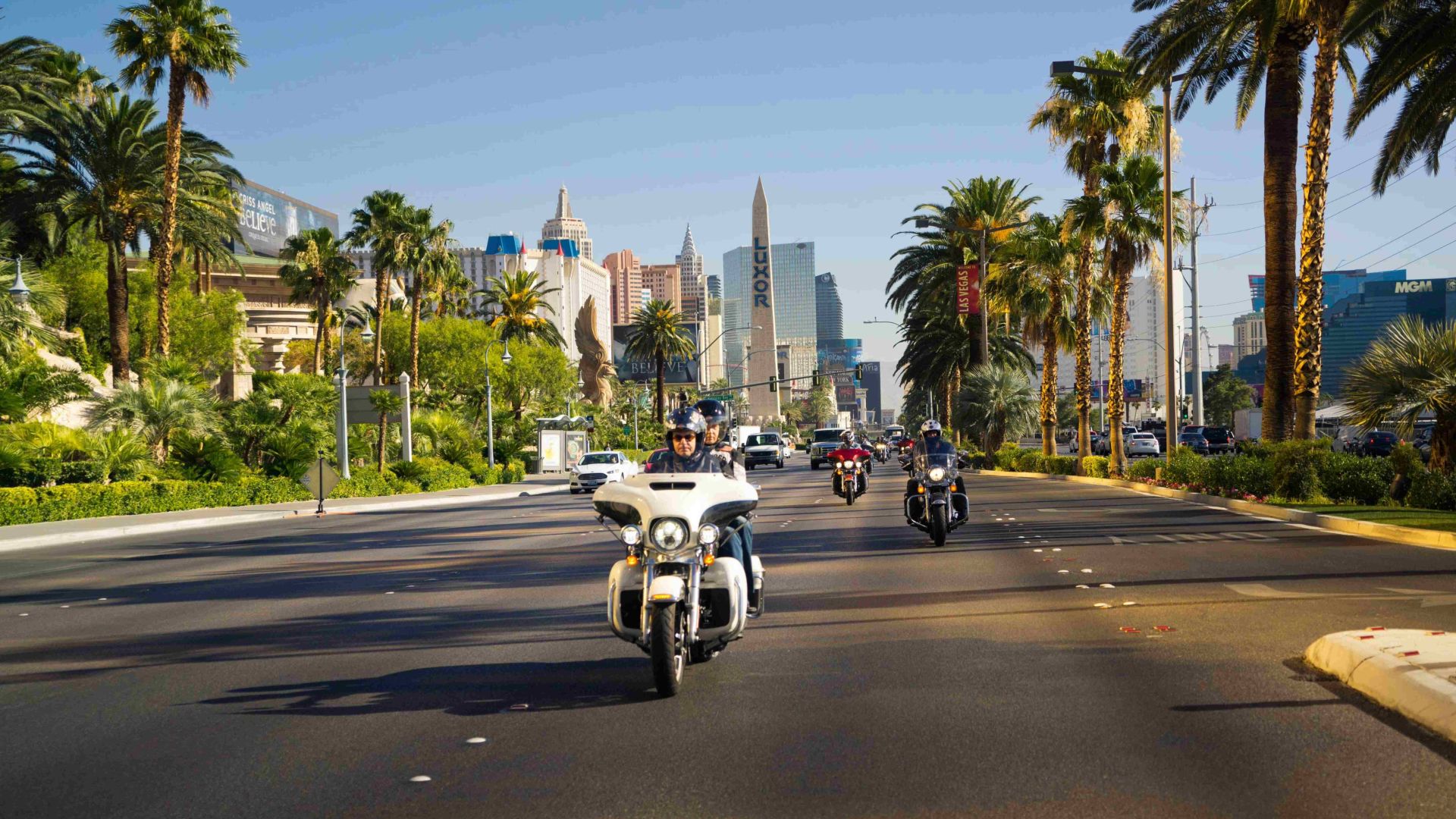
Check-in at Caesars Palace, a global symbol of extravagance, marble, and cinema-inspired grandeur, perfectly illustrating Las Vegas’ ability to recreate entire worlds.
On request, you may enjoy a limousine tour of the Strip, immersing yourself in the spectacle of neon lights and iconic casinos. This optional two-hour experience captures the essence of luxury and excess in the world capital of gaming.
After several days of riding through natural landscapes, this stage acts as a deliberate contrast before returning to the Route 66 spirit the next day.
170 km
Day 12

Las Vegas - Barstow

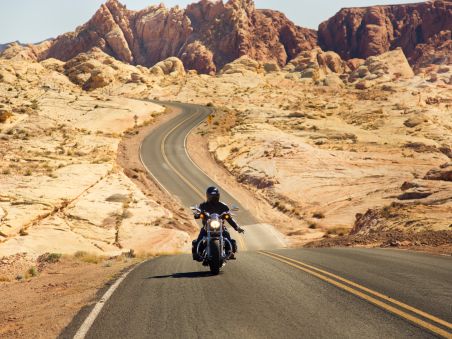
Leaving Las Vegas, the road quickly escapes the urban energy and enters the Mojave Desert, one of the most iconic landscapes of Route 66.
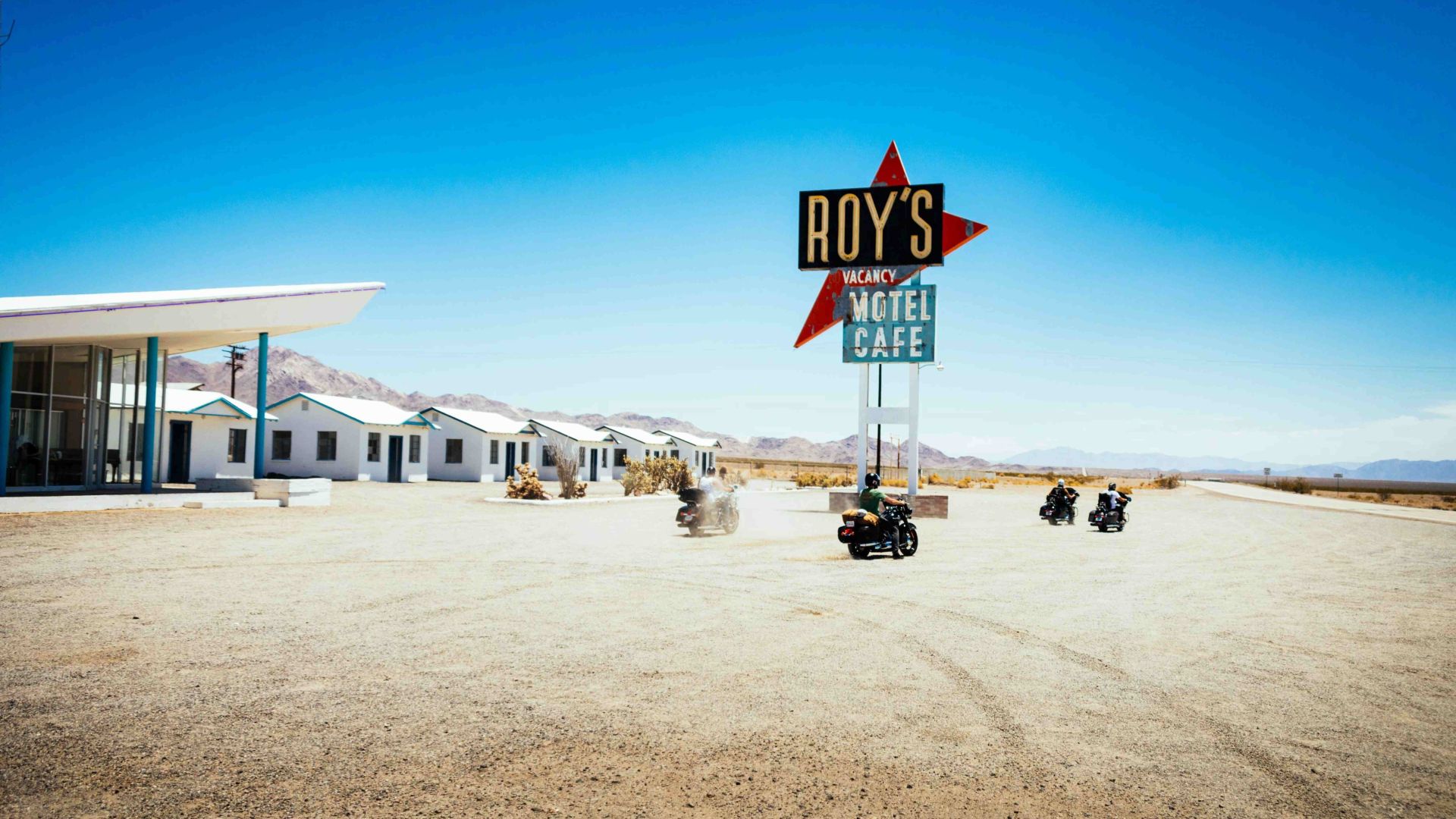
First stop in Amboy, a former roadside stop now made iconic by Roy’s Motel Café. Its gas station, motel, and neon sign—almost unchanged since the 1950s—tell the story of how essential these stops were in the desert.
The journey continues to the legendary Bagdad Café, made famous by cinema. This simple and isolated place perfectly embodies the Californian Route 66 imagination.
Arrival in Barstow marks the end of the desert crossing. A visit to the Route 66 Mother Road Museum, located in a former railway depot, provides valuable historical insight into this stage.
End the day with a night walk to discover the last illuminated neon signs still shining.
250 km
Day 13

Barstow - Santa Monica

This day marks the approach to the ocean and the official end of Route 66. Leaving Barstow, the landscape gradually evolves: the desert fades, relief becomes more pronounced, and urban density increases.
Passing through San Bernardino, considered one of the gateways to Los Angeles. It is here that the very first McDonald’s opened, symbolizing modern roadside America.
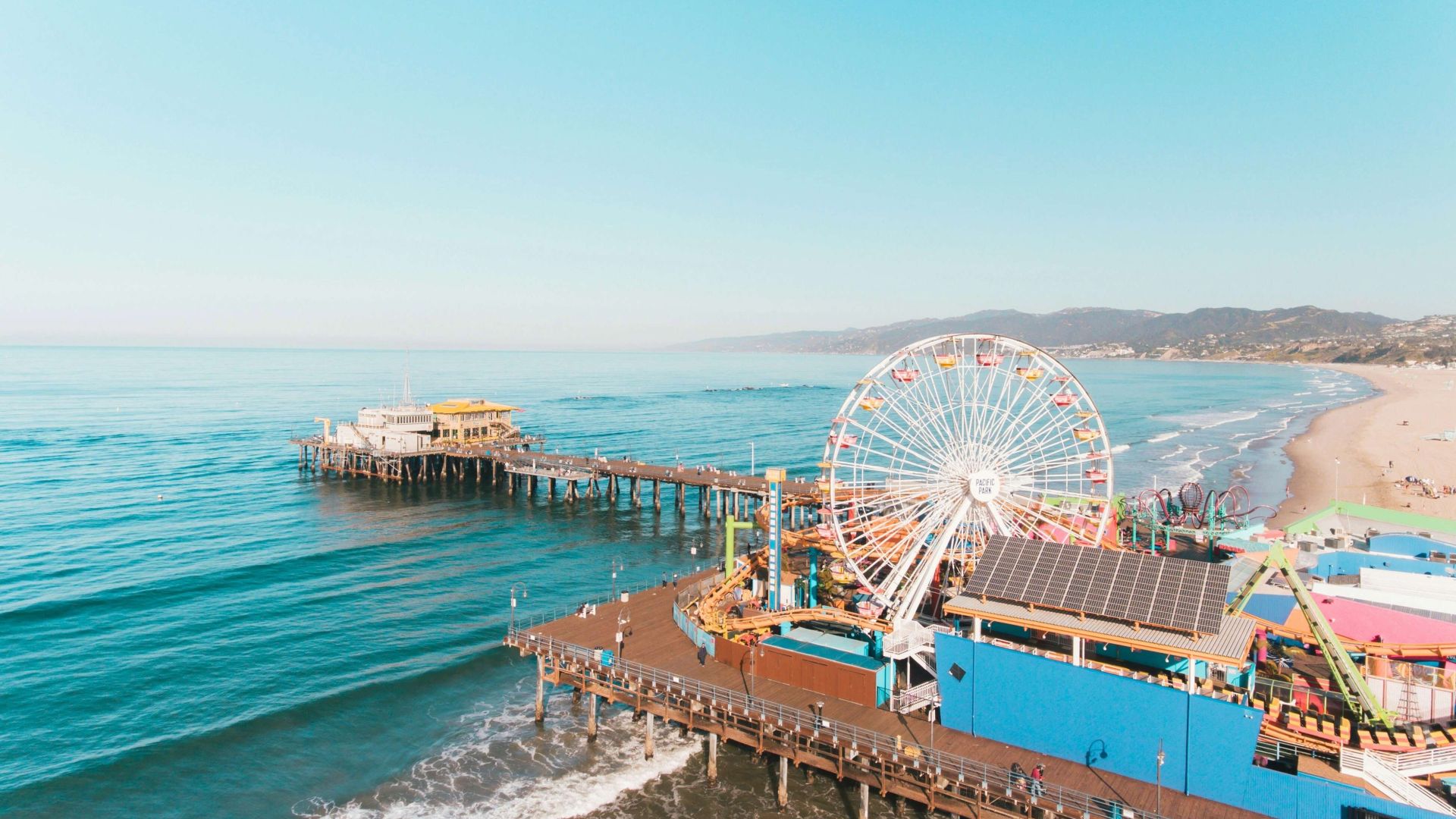
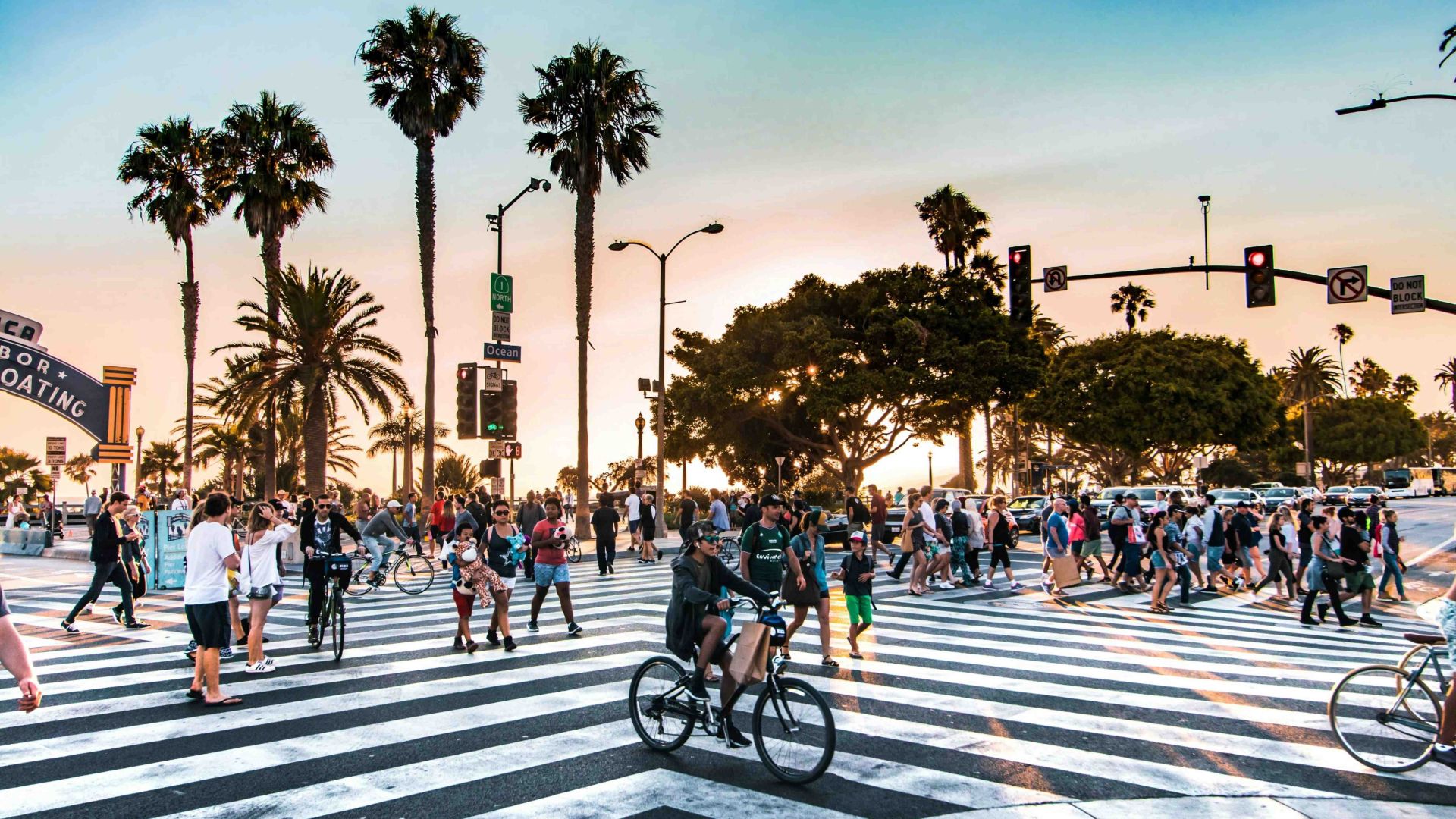
Arrival in Santa Monica is a powerful moment. The photo at the “End of the Trail” sign on the pier symbolizes the completion of the journey, from Chicago to the Pacific Ocean.
The contrast between the ocean and the thousands of miles traveled gives full meaning to the experience.
Free time at the end of the day to explore Venice Beach, Sunset Boulevard, or Griffith Observatory, depending on your preferences.
250 km
Day 14

Los Angeles

This is the final highlight of your journey.
Last day in Los Angeles with no driving constraints. Breakfast can be enjoyed at Cindy’s, a retro diner opened in 1948, perfect for extending the Route 66 atmosphere to the very end.
Enjoy your final moments in California, or let us organize a last guided visit in Beverly Hills before heading to Los Angeles airport for your return flight.
Route 66 officially ends here.

Experience feedback

Starting from €2,400 /person
Pauline
Roadtrip offered by Pauline
Expert in motorcycle travel in the USA – based in Tours, France

Passionate about the vast American landscapes, Pauline designs unique motorcycle journeys across the United States. With thousands of miles of riding experience, she creates itineraries combining iconic roads and spectacular scenery.

Discover our expert
Day 1
Chicago
The adventure begins with your arrival at Chicago O’Hare International Airport (ORD), one of the major historic hubs of the United States. From the moment you step off the plane, you can already feel the unique energy of this city where Route 66 was born.
After arrival formalities, head to your hotel located in the heart of the Loop, the nerve center of Chicago. This district is no coincidence: it’s where it all begins, where industrial America, modern architecture, and popular culture came together to create a global road myth.
Your first urban immersion begins here. Chicago is an open-air museum:
pioneering skyscrapers, elevated train lines, Art Deco façades, buildings from the Chicago School.
This day is intentionally light. It allows you to land, recover, and start projecting yourself into the journey ahead.
Free evening, where you may enjoy a musical immersion in a legendary jazz club, a direct legacy of the city’s African-American history. Then, taste the famous deep dish pizza, an iconic and almost excessive dish, much like America itself.
Tomorrow, the adventure begins.
Day 2
Chicago - Bloomington
Departure in the morning from the Loop to reach the dealership and pick up your motorcycle (or SUV). This moment marks a real transition: the dense city gives way to a more horizontal, more readable America.
First stop in Wilmington, in front of the Gemini Giant. This fiberglass colossus is one of those roadside figures created in the 1950s to attract motorists. It perfectly embodies the commercial and carefree spirit of Route 66.
In Joliet, stop by the former prison made famous by The Blues Brothers, then pass by the Rialto Square Theatre, opened in 1926, a witness to the golden age of popular entertainment.
The road then leads to Pontiac, where car enthusiasts and road culture lovers will find plenty to enjoy: Route 66 Hall of Fame, monumental murals, Pontiac Museum. America tells its own myth in the open air.
At the end of the day, pass through Litchfield and its Skyview Drive-In, an open-air cinema operating since 1950. Even without a screening, the place tells the story of a time when the car was at the center of everything.
Arrival in Bloomington, overnight stay. 
350 km
Day 3
Bloomington - Saint-Louis
Before leaving Bloomington, a subtle but important reminder: Abraham Lincoln lived here. Route 66 is never far from great History.
Leaving the city, ride along the Illinois Brick Road, one of the last original paved sections still visible. The road is felt physically, irregular, deeply rooted.
We recommend a stop in Cuba, nicknamed the Route 66 Mural City. This small Missouri town features 14 outdoor murals depicting scenes from local and national history.
Take a break in Carlinville, then gradually enter the St. Louis metropolitan area. The landscape becomes more urban, industrial, marked by the Mississippi River.
Upon arrival, explore downtown on foot. The Gateway Arch dominates the skyline: it symbolizes westward expansion more than Route 66 itself. The massive underground stadium is also worth a look.
In the evening, a must-stop at Ted Drewes Frozen Custard, a local institution since 1929, famous for its ice creams.
180 km
Day 4
St-Louis - Joplin
Leaving St. Louis, Route 66 gradually moves away from major infrastructure to return to a more human scale. Miles pass through a succession of small towns and typical Midwest agricultural landscapes.
This is where you understand that Route 66 is not just a mythical road, but also a daily life axis, used for decades by families, workers, and anonymous travelers.
Arrival in Joplin marks an interesting transition. The city has preserved and highlighted several elements of its Route 66 heritage, particularly through its murals and restored signage.
A free walk allows you to follow the Route 66 Mural & Neon Photo Tour, a true open-air journey telling the local story, the golden age of the road, and its recent revival.
Recommended break at Joplin Avenue Coffee, an independent café with a contemporary aesthetic, appreciated by locals and travelers alike.
Free evening to explore the streets or simply enjoy the calm after a day on the road.
450 km
Day 5
Joplin - Oklahoma City
Entering Oklahoma happens smoothly. The landscapes open up, the straight lines stretch out, announcing the vast spaces of the country’s center. Tulsa appears as a key stop to understand the cultural impact of Route 66.
Visiting the Woody Guthrie Center is a highlight of the day. Woody Guthrie, a major figure of American folk music, accompanied Dust Bowl migrants through his songs, many of whom traveled Route 66 to escape hardship.
The museum connects music, social history, and the road, giving deeper meaning to the miles traveled.
Then head to 11th Street, the former Route 66 alignment in Tulsa. Neon signs, old motels, and diners tell the story of a time when the road was a constant meeting place.
We recommend eating at Mother Road Market, a modern food hall reinterpreting the spirit of Route 66 through a diverse culinary offering.
Depending on your mood, the evening can continue in a bar with live music, in a country or rockabilly atmosphere.
200 km
Day 6
Oklahoma city - Amarillo
This stage highlights the importance of Route 66 in the development of Oklahoma. The landscapes remain wide and open, dotted with small towns that owe much of their existence to the Mother Road.
The key stop of the day is Clinton, considered the beating heart of Route 66 in Oklahoma. A visit to the Oklahoma Route 66 Museum is highly recommended. It is one of the few museums along the route truly worth your time, even on a fast-paced itinerary. The visit is smooth and well-designed, offering a complete understanding of the evolution of Route 66 from its pioneering days to its decline and eventual revival.
After Clinton, the road fully reveals its horizontal dimension. The scenery becomes drier and more mineral, gradually announcing the approach of Texas.
Arrival in Amarillo marks a real shift in atmosphere. By the end of the day, the low light enhances the vast landscapes and reinforces the feeling of having crossed a symbolic frontier.
330 km
Day 7
Amarillo - Santa Fe
The road gradually leaves the great plains behind and enters a more mineral environment. The colors shift, the light becomes harsher, signaling the approach of New Mexico.
Arrival in Santa Fe marks a true change of atmosphere. One of the oldest cities in the United States, it stands out for its adobe architecture and its strong ties to Native American and Hispanic cultures.
The day is dedicated to wandering through the historic center: Native American art galleries, ancient churches, and peaceful streets.
You may enjoy the sunset from the surrounding hills—an iconic vision of the American Southwest.
Dinner can be enjoyed at Upper Crust Pizza, located in a traditional building. Overnight in a city that fully embodies the spirit of the Southwest.
440 km
Day 8
Santa Fe - Gallup
This is one of the most pleasant days to ride. Leaving Santa Fe happens quickly, and the road leads through increasingly open landscapes. Villages become rare, and traffic almost disappears in some sections. Riding becomes smooth, almost meditative.
Along the way, the scenery alternates between desert plateaus and rock formations. Route 66 blends into the landscape—sometimes discreet, sometimes clearly visible through remnants along the road.
You pass through Grants, with its retro neon signs and typical restaurants, perfect for a quick break without losing momentum.
Arrival in Gallup reinforces the feeling of being far from everything. A true railway and road town, Gallup embodies a raw, passing America, perfectly aligned with the Road Runner spirit.
120 km
Day 9
Gallup - Williams
Leaving Gallup, Route 66 crosses a region where the landscape begins to tell a different story of America.
First possible stop in Lupton at the Yellowhorse Trading Post, an emblematic place of exchange between travelers and Navajo communities. Here you will find turquoise jewelry, local crafts, and traditional objects, but above all a direct connection between the road and the people who have lived here for generations.
The road then follows the Petrified Forest before crossing Holbrook, a town deeply tied to Route 66 history, known for its old motels and preserved roadside atmosphere.
In Winslow, a must-stop at the famous corner immortalized by the Eagles song, now a cultural landmark.
The afternoon is dedicated to the Grand Canyon. The gradual approach prepares you for the visual impact. At sunset, the viewpoints reveal the immensity of this landscape, often considered one of the defining images of the American West. Optional helicopter flight available.
350 km
Day 10
Williams - Kingman
The day begins in Williams, the last town to be bypassed by the Interstate, which explains its strong attachment to Route 66. Stop at Pete’s Gas Station Museum, a perfectly preserved 1940s service station that reflects the era when the road dictated the rhythm of the town.
The road continues to Seligman, often considered the birthplace of Route 66’s revival. It was here that Angel Delgadillo worked to save the road from being forgotten. His barbershop has become a pilgrimage site for enthusiasts.
Break at the Black Cat Café, a historic establishment once frequented by cowboys, railway workers, and truck drivers, still maintaining a simple and authentic atmosphere.
Continuing toward Kingman, the road crosses more arid landscapes, marked by long straight lines and distant reliefs.
Upon arrival, visit the Powerhouse Route 66 Museum, located in a former power plant, retracing the history of the road in Arizona.
For those interested, a detour to Oatman is possible. This former mining town is now known for its wild donkeys roaming freely through the main street, a reminder of the gold rush era.
185 km
Day 11
Kingman - Las Vegas
Leaving Kingman, Route 66 gradually gives way to a more direct desert crossing. The landscapes become more mineral, shaped by heat and long straight lines that have defined the American road trip imagination.
This stretch allows you to fully grasp the contrast between the rural America explored in previous days and today’s destination. Las Vegas suddenly appears, like a complete rupture from the world of Route 66.
The city represents another American myth, born later: excess, entertainment, and illusion.
Check-in at Caesars Palace, a global symbol of extravagance, marble, and cinema-inspired grandeur, perfectly illustrating Las Vegas’ ability to recreate entire worlds.
On request, you may enjoy a limousine tour of the Strip, immersing yourself in the spectacle of neon lights and iconic casinos. This optional two-hour experience captures the essence of luxury and excess in the world capital of gaming.
After several days of riding through natural landscapes, this stage acts as a deliberate contrast before returning to the Route 66 spirit the next day.
170 km
Day 12
Las Vegas - Barstow
Leaving Las Vegas, the road quickly escapes the urban energy and enters the Mojave Desert, one of the most iconic landscapes of Route 66.
First stop in Amboy, a former roadside stop now made iconic by Roy’s Motel Café. Its gas station, motel, and neon sign—almost unchanged since the 1950s—tell the story of how essential these stops were in the desert.
The journey continues to the legendary Bagdad Café, made famous by cinema. This simple and isolated place perfectly embodies the Californian Route 66 imagination.
Arrival in Barstow marks the end of the desert crossing. A visit to the Route 66 Mother Road Museum, located in a former railway depot, provides valuable historical insight into this stage.
End the day with a night walk to discover the last illuminated neon signs still shining.
250 km
Day 13
Barstow - Santa Monica
This day marks the approach to the ocean and the official end of Route 66. Leaving Barstow, the landscape gradually evolves: the desert fades, relief becomes more pronounced, and urban density increases.
Passing through San Bernardino, considered one of the gateways to Los Angeles. It is here that the very first McDonald’s opened, symbolizing modern roadside America.
Arrival in Santa Monica is a powerful moment. The photo at the “End of the Trail” sign on the pier symbolizes the completion of the journey, from Chicago to the Pacific Ocean.
The contrast between the ocean and the thousands of miles traveled gives full meaning to the experience.
Free time at the end of the day to explore Venice Beach, Sunset Boulevard, or Griffith Observatory, depending on your preferences.
250 km
Day 14
Los Angeles
This is the final highlight of your journey.
Last day in Los Angeles with no driving constraints. Breakfast can be enjoyed at Cindy’s, a retro diner opened in 1948, perfect for extending the Route 66 atmosphere to the very end.
Enjoy your final moments in California, or let us organize a last guided visit in Beverly Hills before heading to Los Angeles airport for your return flight.
Route 66 officially ends here.

Upcoming departures

Starting from €2,400 /person
On the dates of your choice
Your tailor-made roadtrip

Price details

The price includes
-13 nights in a double room in 4-star accommodations -Motorcycle rental with model choice (or SUV on request) -Helmet and side saddlebags provided -Unlimited mileage -A SIM card with 10GB of data
The price does not include
-International flights -Meals and drinks during the trip -Mandatory motorcycle insurance to be taken out locally -Optional Planet Ride travel insurance -Optional activities mentioned in the itinerary (helicopter flight, limousine tour in Las Vegas…) -Anything not specified in “price includes”

Important information

Traveling Route 66 from Los Angeles to Chicago means experiencing the legend from a different perspective. The same ribbon of asphalt, the same iconic landmarks, the same feeling of freedom — at a much more attractive price.
A different way to embrace Route 66, on dates that suit you best. Because in the end, what matters isn’t the direction… it’s the spirit!
From:
  • 2 riders per motorcycle (double room) = €2,400 /person
  • 2 riders, 2 motorcycles (double room) = €3,800 /person
  • 1 rider per motorcycle (single room) = €4,800 /person
For any motorcycle rental in the United States, you must be at least 21 years old and hold a motorcycle license for a minimum of 2 years. Only a Category A driving license is recognized to ride a motorcycle on U.S. territory.
Roadtrip en groupe

This roadtrip, just for your group

Would you like to add or privatize a departure date for your family, friends, association, or company group? Tell us about your project.

Installment payments with no fees
A team based in France
Trips insured by our Gritchen partner
A sustainable tourism player
Newsletter

Don't miss the next event dates in your area

I agree to receive news and promotions from Planet Ride Experience